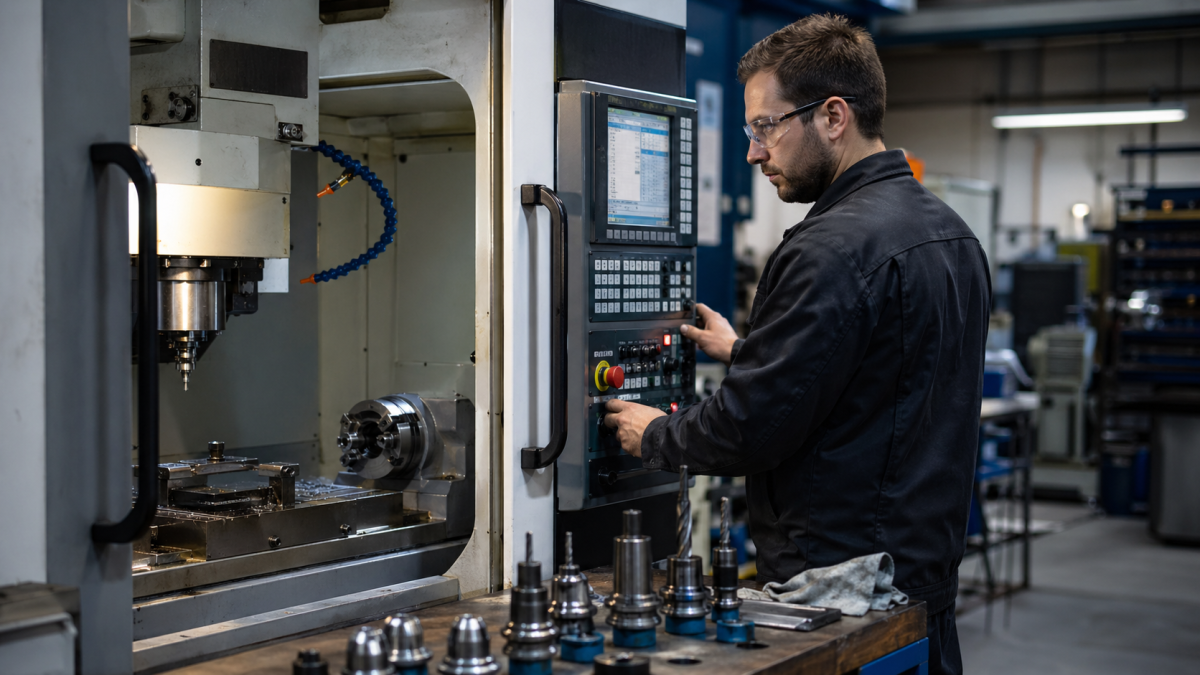
The job title has become too weak a signal
In 2026, a CNC vacancy often looks tidy only on paper. The title may say “CNC operator”, “CNC machinist”, “setup technician”, “programmer-operator”, or something in between. But the same title can hide very different expectations from one shop to another: in one place the person only loads blanks and checks size, while in another they must prepare the machine, understand the workholding, prove the first part, and calmly explain why the process has started to drift.
That is why the market is becoming stricter about impressive words in a resume. It is no longer enough for an employer to see a familiar title. The real question is what the person can do without constant support from a supervisor, process engineer, or stronger coworker, especially when the area runs short batches, several machines, automatic loading, or frequent changeovers.
A good operator on a stable operation is still valuable. But when the vacancy requires independence, the job title stops being the main proof. The sharper question is different: what does the person do when the part is not yet in production, the machine is not fully set, and the risk of scrap is already present?
Setup shows the real depth of experience
Setup skill is uncomfortable for a shallow interview. It cannot be checked properly with the question “how many years have you worked on CNC machines?”. Someone may stand at a machine for ten years and barely touch the process if the difficult decisions were always made by others. Another specialist may, in three years, go through workholding, offsets, first-part approval, corrections, measurement, and repeated deviation analysis.
That is why setup has become a more honest marker of level. It shows whether the person understands the connection between drawing, blank, tool, locating, offsets, and inspection. Not as a polished theoretical answer, but as an order of work.
On the shop floor, the difference appears quickly. One worker waits until someone tells them which offset to enter. Another first checks the measurement, looks at whether the deviation repeats, remembers whether the blank batch changed, and only then touches the machine. The difference may not appear in the job title. It almost always appears in pay level and production risk.
Why 2026 makes this gap wider
Manufacturers keep moving toward automation, multi-machine work, and tighter planning. This does not mean every shop suddenly needs universal heroes who can do everything. It means weak independence has become more expensive. In the past, a supervisor might walk over to one machine and correct the situation calmly. Now that same person is often split between several areas, a robotic cell, an urgent batch, and quality questions.
In that environment, the employer starts valuing more than “worked on Haas” or “knows Fanuc”. They need a person who understands where the process is stable and where it is only lucky. Setup skill stops being one line in the resume and becomes a way to reduce the area's dependence on constant manual management.
There is another uncomfortable detail. Automation does not hide weak setup; it multiplies its consequences. If the blank seats poorly, the tool is already near the edge of its life, and inspection is placed too late, automatic loading will simply repeat the mistake faster and more neatly. That is why a specialist who can think during setup becomes more important than someone who only tends an already stable cycle with confidence.
What employers should read between the resume lines
A CNC specialist's resume often contains many familiar words: machines, controls, materials, drawings, measuring tools, tolerances, programs. The problem is that this list rarely shows the person's real role in the process. They may have performed setup independently, or they may only have been nearby while the setup person launched the machine.
It is more useful to look not at the number of terms, but at signs of responsibility:
- independent machine preparation for a new part;
- first-part work and understanding why the first part does not immediately hit size;
- choosing the inspection sequence, not only measuring when told;
- making offsets correctly without randomly “tuning” the process;
- understanding workholding, locating, and clamping repeatability;
- knowing when a problem should be handed to a process engineer or supervisor.
If these signs are missing, the resume title may sound strong, but the hiring decision remains foggy. The reverse is also true: a person with a more modest title may be more useful if they have actually carried the process with their hands and head, not only tended a machine that was already set up.
Candidates should speak in examples, not titles
For applicants, this is good news if they have real setup experience. They do not need to look “senior” or invent a louder position. It is much more convincing to show which tasks they have already solved independently.
A weak sentence sounds like this: “worked as a CNC operator, performed setup, controlled quality”. It is not bad, just too general. A stronger approach is different: “independently launched short batches on a vertical machining center, checked the first part, adjusted tool offsets, controlled fit dimensions, and handed over workholding notes to the next shift”. Now the employer sees a working picture, not just a title.
The resume does not need to become a technical novel. A few concrete fragments are enough. What was the part? What had to be set? Where did risk appear? How did the candidate know the process had become stable? These details often say more than a long list of machines.
The interview should test the order of thinking
If a company is hiring for an area where setup matters, a normal interview can easily create false confidence. The candidate may speak calmly about tolerances, controls, and materials, but stumble when asked to explain the sequence of actions during a new part launch.
It is better to give a short work scenario. For example: a new blank batch arrives, the first part is close to the upper tolerance limit, the tool is fresh, the program has been used before, and the supervisor is busy in another area. What does the candidate check first? What should not be touched until the measurement is confirmed? When do they stop the process, and when do they continue with extra inspection?
In that conversation, the important thing is not a perfect classroom answer. It is logic. A good specialist usually does not rush straight to changing an offset. They first want to understand whether the issue is measurement, locating, tool, blank, or the expectation for the process itself. That is not slowness. It is the habit of not treating the machine blindly.
Where CNC Passport can help without extra bureaucracy
The problem in many CNC hires is not that the employer asks no questions. The problem is that the answers are poorly recorded and later turn into a vague impression: “seems confident”, “apparently did setup”, “resume looks suitable”. For an ordinary vacancy, that may sometimes be enough. For independent setup work, it is thin.
CNC Passport can be useful as a place where experience, test tasks, and skill conclusions are collected more cleanly. Not instead of a production interview and not instead of a trial task, but next to them. When it is clear which skills are confirmed, which need checking, and where the candidate is only using familiar words, the decision becomes calmer.
This matters especially for recruiters and HR teams who are not expected to be process engineers. It is hard for them to tell the difference between a strong job title and strong experience. Structured verification helps avoid selling the employer a polished resume instead of a person who can actually hold the area.
The market will pay for independence, not a label
In CNC jobs in 2026, the job title still matters. It helps identify the general direction of experience. But it should no longer be the main proof of level. Too many shops use the same words for different tasks.
Setup skills matter more because they sit closer to real production risk. Who can launch the part without unnecessary loops? Who notices that the problem is not the program but the clamp? Who does not chase offsets after one doubtful measurement? Who leaves clear information for the next shift instead of only saying “everything is fine”?
This is where the title ends and professional level begins. The employer is not buying a line in a resume. They are buying fewer stops, fewer guesses, less scrap at the start of a batch, and fewer moments when a good supervisor drops their own work again because “the operator seems experienced, but cannot sort it out alone”.
Open materials on CNC trends, automation, and hiring in 2026 were used while preparing this article.