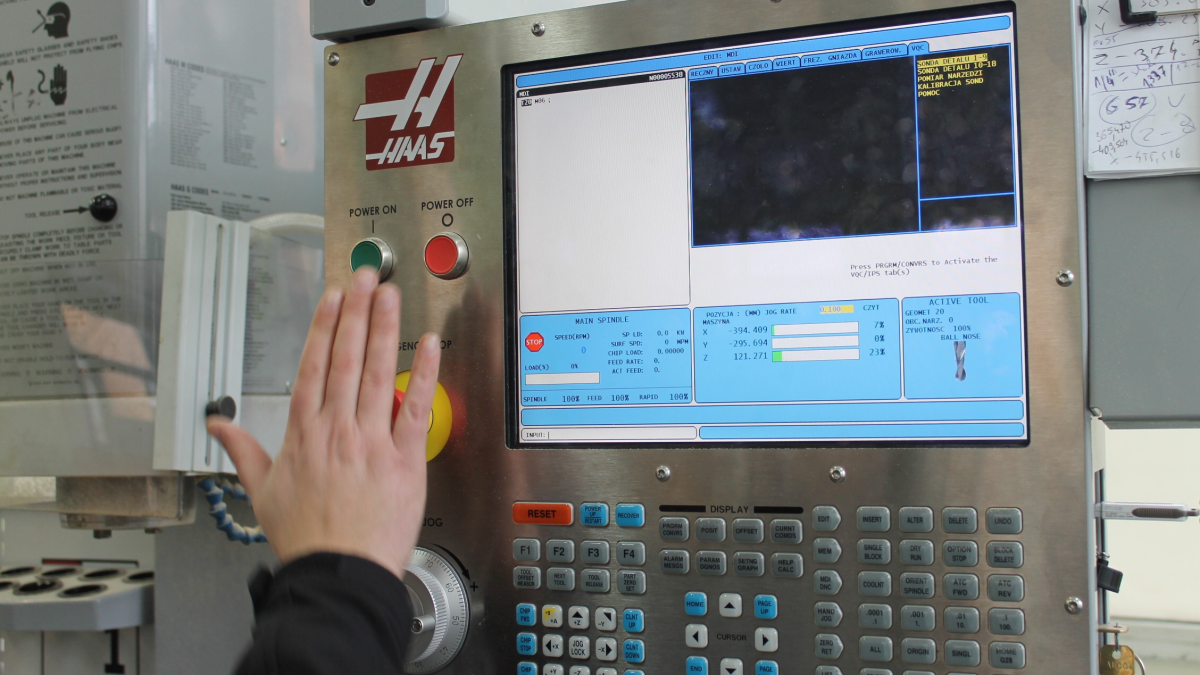
Comparing CNC candidates is difficult when one has worked on turning centers, another on milling machines, a third on 5-axis equipment, a fourth on Swiss-type machines, and a fifth comes from manual machining or a related production role. If you look only at the machine name or control, it is easy to make a mistake: overvalue someone with similar equipment or undervalue a candidate whose experience is different but transfers well to your role.
For a recruiter and employer, the goal is not to find a candidate with a perfectly identical past. The goal is to understand which skills are truly needed at the workplace, which can transfer from another type of equipment, and which require training. This is especially important during talent shortages, when an overly narrow filter can block access to strong people.
This article explains how to compare CNC candidates with different machine experience: how to separate equipment from independence level, how to look at quality and production discipline, which questions to ask the hiring manager, and how to make a decision without shallow keyword matching.
Why the same title does not mean the same experience
Two candidates may both be called CNC operators but perform completely different tasks. One loaded parts in a stable serial operation, checked dimensions according to instructions, and called a setup specialist when there was a deviation. Another participated in batch launches, changed fixtures, checked the first part, kept shift documentation, and communicated with quality. The resume title is similar, but the independence level is different.
The same is true for machine names. Experience on 3-axis milling can be very strong if the candidate worked with different materials, precise parts, measurement, and unstable processes. Experience on more complex equipment can be superficial if the person only performed a repeatable operation without making decisions.
That is why comparison should start not with equipment, but with the candidate's actual role: what they did independently, which decisions they made, what they were responsible for, and how they reacted to problems.
First break down the requirements of your role
Before comparing candidates, you need to understand what your vacancy actually requires. Employers often say they need experience on the same machine, while the real critical factors are different: accuracy, discipline, measurement, shift schedule, careful handoff of information, willingness to learn, or ability to work without constant supervision.
It is useful to divide requirements into three groups:
- Critical from day one: skills and behavior without which the candidate would create unacceptable risk.
- Transferable: experience gained on another machine that can be useful after a short adaptation.
- Needs training: elements specific to your equipment, interface, fixtures, or internal process.
This breakdown reduces dependence on the machine name. Sometimes a candidate without experience on your exact equipment can be stronger than someone with a similar machine but weak discipline and a narrow responsibility area.
Compare the level of independence
Independence often transfers better than a specific equipment interface. If the candidate works carefully, understands the boundaries of their role, asks questions in time, controls quality, and documents problems, it is easier for them to adapt to a new machine. If a person is used only to following one instruction without understanding the process, a similar machine does not guarantee success.
Questions for comparison:
- what the candidate did without mentor help;
- when they were required to stop and call a senior person;
- which results they were responsible for during the shift;
- which problems they could solve independently;
- what documentation they kept or handed over;
- how quickly they learned new operations in the past.
The answers help you understand who is closer to your role in maturity, even if their previous machines were different.
Separate machine experience from production thinking
Production thinking is the ability to see not only the machine, but the process around it: material, part, measurement, fixtures, repeatability, deadlines, shift handoff, and quality. It matters in almost every CNC role and often transfers between equipment types.
A candidate with strong production thinking can usually explain:
- how they understood that an operation was stable;
- what they did when a dimension or quality result deviated;
- how they communicated with a setup specialist, supervisor, or quality;
- how they documented a problem for the next shift;
- which mistakes they learned to prevent;
- how they followed safety and workplace order requirements.
These answers matter more than a long list of machine models. Equipment can be trained faster than care, responsibility, and the ability to think about the process.
Look at measurement and quality
Measurement is one of the best bridges between different types of CNC experience. A person can move from one equipment type to another, but if they understand dimension, tolerance, repeatability, reaction to deviation, and responsibility for quality, their experience transfers better.
When comparing candidates, ask:
- which measuring tools they used every day;
- which dimensions or characteristics they checked;
- how they understood that a result was moving toward a tolerance limit;
- what they did when the result was unstable;
- how they documented and handed over quality information;
- how they interacted with the quality team.
If a candidate from another machine speaks confidently about measurement, quality, and reaction to problems, they deserve serious consideration. If a candidate from the right equipment cannot explain how they controlled results, the equipment match may be a weak advantage.
Account for production type
Experience on different machines matters, but production type can sometimes matter more. Serial production, small batches, repair work, toolmaking, prototypes, and contract machining require different habits. A person from a stable serial environment may work well by procedures but struggle where every order is different. A person from a small-batch environment may be flexible but need adaptation to strict standards in a serial process.
Compare not only the machine, but the environment:
- serial work or small batches;
- repeatable parts or constantly new tasks;
- strict instructions or high independence;
- availability of mentor and engineering support;
- level of documentation requirements;
- production pace and cost of error.
Sometimes a candidate with different equipment but a similar production type will adapt faster than a candidate with the same machine from a completely different environment.
Compare not only what they know, but how they learn
When candidate experience comes from different machines, learning ability becomes a key factor. You need to understand how the person moved to new tasks before, how they reacted to unfamiliar equipment, how they asked questions, and how they documented new rules.
Useful questions:
- which new machine, process, or tool the candidate learned most recently;
- what was hardest during adaptation;
- how they learned: through a mentor, instructions, practice, notes, repetition;
- which mistakes they made at the beginning and how they stopped repeating them;
- how long they usually need to work confidently by a new procedure;
- what support they need during the first weeks.
A candidate who can describe their learning method often adapts more reliably. A candidate who says they will figure it out quickly but cannot give an example of past adaptation requires caution.
Do not overvalue the control or machine brand
Experience with a specific control or machine brand can matter, especially if the role requires a fast start without training. But it is not always the main criterion. An interface can be learned if the candidate has a strong foundation, discipline, and process understanding. On the other hand, experience with the same brand will not help if the person is not ready to take responsibility, does not understand quality, or works poorly with the team.
Instead of asking whether they worked on the same machine, it is more useful to ask:
- which tasks they performed on that machine;
- how often they worked independently;
- which problems they solved;
- which instructions they followed;
- how they interacted with the setup specialist or supervisor;
- how they transferred experience to new equipment before.
The brand and control are part of the picture, but not the whole picture. Strong hiring requires seeing the person more broadly.
Create a simple comparison table
When there are several candidates, it is useful to compare them by the same criteria. Otherwise one person may stand out because of familiar equipment, another because of confident speech, and a third because of tenure. A table helps remove randomness.
Example criteria:
- real level of independence;
- production type the candidate comes from;
- measurement and quality;
- production discipline;
- problem-solving experience;
- learning ability and adaptation;
- fit with schedule and conditions;
- first-month risks;
- skills that need training.
This approach helps explain to the hiring manager why a candidate with different equipment may be a strong option, or why a candidate with a similar machine still carries risk.
When exact machine experience is truly critical
There are situations where experience on specific equipment or a specific machine type is truly needed. For example, if the vacancy is urgent, there is no mentor, the cost of error is high, and the person must become almost immediately independent. Or if the equipment is rare, the process is poorly documented, and training would take too much time.
Exact experience matters more when:
- there is no time for adaptation;
- there is no strong mentor;
- the role requires independence from the first week;
- an error would be very expensive or dangerous;
- the equipment or process is very different from typical CNC roles;
- the company is not ready to build a training plan.
But even in those cases, you should check not only the equipment name, but the candidate's actual level. Worked on that machine does not always mean can perform your role safely and consistently.
When you can hire a candidate with different experience
A candidate with different machine experience can be a good decision if their foundation is strong and the company is ready for adaptation. This is especially true if the role allows the first weeks under supervision, has a mentor, documentation, and a clear learning path.
Such a candidate may fit if:
- they have strong discipline and care;
- they work confidently with measurement and quality;
- they understand the production environment and responsibility;
- they know how to learn and ask questions;
- they honestly state what they do not know yet;
- their previous production type is similar to yours;
- the company can provide safe adaptation.
In the shortlist, such a candidate should be presented honestly: not as an exact ready match, but as a strong candidate with transferable skills and specific training areas.
How to explain the choice to the hiring manager
If the recruiter proposes a candidate with different equipment, the hiring manager may be skeptical. That is normal. The important thing is not to sell the candidate with general praise, but to show the logic.
A good explanation can look like this:
- The candidate has no experience on our exact machine, but has a strong foundation in measurement and quality control.
- They worked in a similar production type: small batches, frequent task changes, strict documentation.
- They honestly described which operations they performed independently and where they worked with a mentor.
- The main risk is adaptation to the interface and our fixtures; this can be addressed in the first weeks.
- I would consider this person as a candidate with potential, not as a fully ready independent specialist.
This format helps the production team quickly understand why the candidate is worth attention and where caution is needed.
Red flags when comparing candidates
When comparing people with different experience, it is important to notice not only strengths, but also risks.
- the candidate cannot explain what they did independently;
- experience is limited to one operation but presented as broad;
- the person overestimates how transferable their experience is;
- there are no examples of reacting to quality problems;
- the candidate asks no questions about the new equipment and process;
- they do not admit they will need adaptation;
- they have a poor attitude toward instructions or mentoring;
- they promise a fast transition too confidently without understanding the conditions.
The main risk is not a lack of experience on the exact machine, but lack of honesty, learning ability, and production discipline.
Final orientation
CNC candidates with experience on different machines should be compared not by equipment names, but by transferable skills, independence, quality, discipline, and ability to adapt. The machine matters, but it should not hide the whole picture.
A strong comparison process helps an employer see more options: ready specialists, candidates with potential, and people who would fit another role better. It also helps the recruiter explain the shortlist honestly and specifically, without exaggeration.
If after comparison it is clear what the candidate already can do, what they need to learn, and what risk exists in the first weeks, the decision becomes manageable. That is what separates mature CNC hiring from simple keyword matching in resumes.