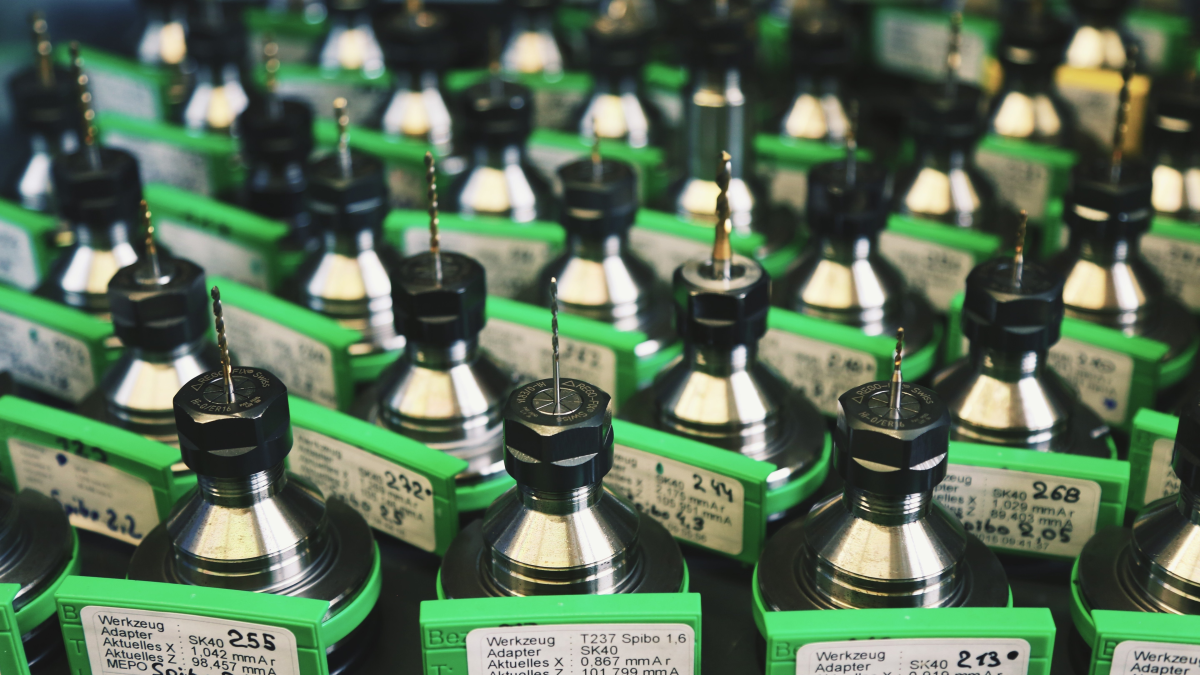
Sustainable CNC machining rarely starts with a large initiative. More often it shows up in ordinary details: tools wear predictably, scrap does not repeat for weeks, coolant does not become a source of trouble, machines do not run with no purpose, and process deviations are investigated before they become part of the shift routine.
For a CNC specialist, this is a practical layer of professionalism. It does not replace drawing reading, setup work, or measurement control. It strengthens them. Manufacturing loses money not only through major failures. Losses also come from material, time, inserts, repeated starts, unnecessary power consumption, and parts that could have been good the first time.
Coolant as part of process stability
Coolant is easy to treat as background: it is in the tank, it reaches the cutting zone, and it appears to do its job. In a real process, though, coolant affects tool life, surface finish, corrosion, odor in the shop, filter condition, and dimensional repeatability.
Problems often appear gradually. Foam changes first, then chip evacuation becomes less reliable, the surface finish becomes less consistent, and tools start wearing faster than expected. If the last operation is the only thing being checked, the cause can look random. When concentration, contamination, fluid condition, and maintenance are considered together, the picture becomes clearer.
The useful skill is not turning an operator into a chemist. It is understanding the connection between fluid condition and machining results, noticing changes early, and avoiding the habit of blaming material or tooling before the basic process conditions have been checked.
Tool life is not economy at any cost
A tool should be used efficiently, but not until failure. There is a clear difference between getting reasonable value from an insert and taking a risk that will cost more than the insert itself. If the cutting edge is already causing dimensional drift, poor surface finish, or vibration, continuing the run may be more expensive than replacing it.
An experienced CNC machine operator sees more than visible wear. Sound, chip shape, burr formation, heat marks, load changes, and dimensional repeatability all matter. Sometimes the insert is the real issue. Sometimes the cause is tool overhang, clamping, coolant delivery, the workpiece, or the cutting data.
A sustainable approach does not mean running slowly everywhere. It means knowing where tool life can be used safely and where trying to squeeze out a few more parts increases the risk of scrap, downtime, and fixture or holder damage.
Scrap is rarely random twice
One bad part may come from an error, an unstable blank, or an incorrect setup. Repeated scrap deserves a different response. If the defect returns, the process has a weak point: locating, stock allowance, clamping, operation sequence, inspection timing, tool wear, or thermal behavior.
Scrap reduction starts with separating symptoms from causes. A poor surface is not always only a speed and feed problem. A drifting dimension is not always only an offset problem. Distortion after unclamping may come from workholding, material behavior, or the order of operations.
The earlier a shop finds the repeatable cause, the less material and time it wastes. This matters most with expensive blanks, short runs, and parts where rework is not realistic.
Energy is lost through process organization
Energy use in manufacturing is often discussed too abstractly. At the machine level it is easier to see: a machine stays fully powered while waiting, pumps run without a task, compressed air leaks, a program contains unnecessary movement, or the next batch is prepared too late.
One person cannot solve every one of these issues. But the people who work next to the machine every day usually see repeated losses clearly. If equipment regularly waits for material, tooling, measurement, or a setup decision, the issue is not only kilowatt-hours. It is a loss of production rhythm.
Sometimes the best contribution to energy efficiency is a more organized process: prepared workholding, clearer sequencing, less idle time, fewer repeated runs, and a shorter path from the first good part to stable production.
The skills that actually matter
Sustainable manufacturing depends on people who can connect small technical details with final cost. For someone working with CNC equipment, the valuable habits are concrete rather than ceremonial.
- Check coolant condition as part of quality analysis, not as a separate housekeeping task.
- Judge tooling by process signals, not only by the number of parts already produced.
- Investigate repeated scrap to the cause instead of only replacing the failed part and continuing.
- Understand where inspection reduces real risk and where it only slows the shop down.
- Notice idle time, air leaks, unnecessary pump operation, and weak batch preparation.
- Connect CNC machining quality with material, tooling, time, and energy consumption.
These skills do not require a separate job title. They develop in people who do not look at an operation too narrowly. Machine, tool, fluid, blank, measurement, and shift organization work as one system. When a weak point repeats, it has to be seen.
Why it strengthens a professional
The labor market values more than speed at the machine. A strong manufacturing worker helps the shop become more predictable: fewer random stops, fewer questionable parts, less premature tool wear, and fewer hidden losses.
Sustainable machining does not make CNC work less practical or too theoretical. It brings attention back to real conditions: what is happening to the tool, why the part is out of tolerance again, why the machine is waiting, and why the same operation works worse today than it did yesterday.
When a specialist can see these connections, they become more useful to the shift, the process engineer, and the shop lead. Not because they talk about reducing losses, but because they help find those losses in daily work and gradually remove them from the process.